
In 2026 our summer course in musicology jointly organised for the 8th time with CEU Summer University, to be held in person, in Budapest, between June 29 – July 7 2026. Our new focus and title will be Romani Music between Heritage and Politics – a Music as Heritage summer course.
Our unique and intensive summer course will be exploring the topic of Roma culture and heritage with a special focus on the intersections of artistic, social and political aspects. We will uncover these topics through a variety of genres including pop, authentic folk and coffee-house string bands, rural and urban lores, with the lead of our course director: Jana Ambrózová.
Faculty: Jana Ambrozova, Zsuzsanna Szálka, Ursula Hemetek, Angela Kocze, Petr Nuska, Svanibor Pettan, Anna G. Piotrowska, Martin Strokes, Balázs Weyer
The course is aimed at both practicing professionals as well as graduate students.
For further academic information on the course, eligibility criteria and funding options please visit the course website!
Please note, that the application for the course has been closed.
Official site of Romani Music between Heritage and Politics
Past courses:
Music as Heritage 2025
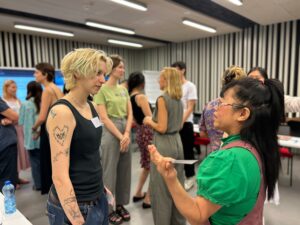
After six successful editions (offline and online), we continued our summer course in Budapest, focusing on music as heritage! In 2025 we focused on the multilayered connection of music and language, through the lens of heritage management and cognitive science, with the lead of our course director: Martin Stokes. The course structure prioritized active participation and group work of students: keynote lectures of leading ethnomusicologists were followed by short practical assignments and concluded with joint discussion, daily.
Lectures and masterclasses dealt with endangered languages and musical traditions – with eyes set on safeguarding and revitalizing these cultural practices -, as well as with cultural embeddedness in music cognition, musical and language procession. The 9-day intensive course further included an individual project development program, a 1.5 day field trip to the Serbian-Hungarian community of Ráckeve with authentic music performance.
Music as Heritage 2024
The sixth edition of our ‘Music as Heritage’ summer course focused on storytelling and music as intangible heritage, community and identity building through contemporary storytelling, as well as musical heritage in the audiovisual world, with the lead of our course directors: Martin Stokes (King’s College London) and József Laszlovszky (CEU Vienna). We didn’t miss out on the dance house visit either, and an intimate performance by WOMEX Awardee Mónika Lakatos and her husband Mihály ‘Mazsi’ Rostás.
The 2024 edition featured Martin Stokes (King’s College London, UK) and József Laszlovszky (Central European University, Budapest / Vienna) as course directors; Laura Leante (University of Durham, Durham, UK), Dafni Tragaki (University of Thessaly, Greece) Yara Salahiddeen (University of Oxford, Oxford, UK), James Plumtree (American University of Central Asia, Bishkek, Kyrgyz Republic), Judit Varga (Institute for Composition, Electroacoustics and Tonmeister Education, mdw, Vienna, Austria), Pia Hoffman (music supervisor), Jeremy Braverman (Library’s Media Hub, CEU, Vienna, Austria), Zsuzsanna Szálka (Magyar Zene Háza – House of Music, Hungary) and Balazs Weyer (Music Hungary, Budapest, Hungary) as lecturers.

Music as Heritage 2023
Music and migration, the role of music in forming identities, and the musical culture of diasporas constituted the focal topics of our 2023 summer course. With course directors Martin Stokes (King’s College London) and József Laszlovszky (CEU Vienna) and speakers Denis Laborde (CNRS and EHESS), Tetiana Chernata (KUBG University, Kiev), Svanibor Pettan (University of Ljubljana), Florian Scheding (University of Bristol) and Dafni Tragaki (University of Thessaly), we explored several communities, historical and current societal aspects. A two-day masterclass given by Vienna-based Iranian musicians, and a dance house visit in Budapest enriched the course material.
Music as Heritage 2022
Returning to the offline format, the 2022 edition of ‘Music as Heritage’ concentrated on music curation and the practical aspects of heritage management. Experts and professionals from the Barbican, Lincoln Center, Franz Liszt Music Academy and the Paris Philharmonic added their insights, under the direction of József Laszlovszky and Alain Weber. Countering the involuntary pandemic hiatus affecting the cultural sector, our course aimed to provide hands-on and readily applicable know-how to participants, ensuring resilience.
Music as Heritage 2021
Fittingly, our second online edition of ‘Music as Heritage’ looked at digital tools in ethnomusicology, the evolution of the field and the foundations laid down by Béla Bartók. Our work was assisted by Péter Laki from Bard College, Rachel Harris and Angela Impey from SOAS, Jonathan Stock of University College Cork as well as Martin Stokes from King’s College London.
Music as Heritage 2020
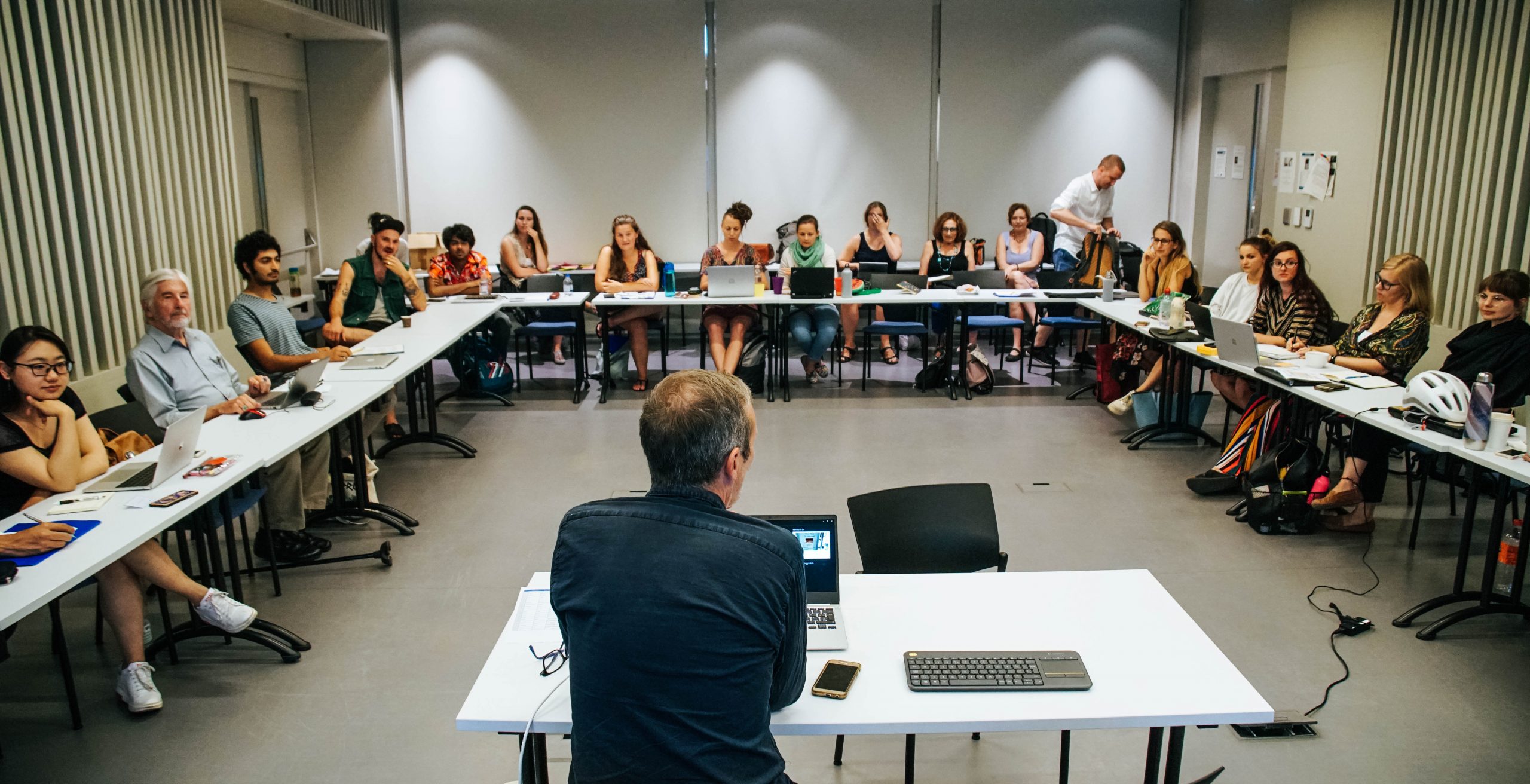
Held online due to the global pandemic, our 2020 summer course managed to carry on the impetus of the previous year. Our topic: the heritage of the Western Balkan region was discussed by the likes of Jonathan Stock (University College Cork), Martin Stokes (King’s College London), as well as Ardian Ahmedaja (Universität für Musik und darstellende Kunst Wien). Feedback from participants painted a highly gratifying, inspiring course notwithstanding its remote format.


Music as Heritage 2019
The first ‘Music as Heritage’ summer course posited music as part of intangible cultural heritage within the heritage studies programme of CEU. József Laszlovszky (CEU Vienna) and experts from Hangvető launched the summer university organically combining theoretical and practical aspects of heritage management. We have invited notable speakers from the fields of ethnomusicology and music sociology; Martin Stokes (King’s College London), Jonathan Stock (University College Cork) and Jana Ambrózova (UKF University Nitra).
Our novel approach, flexible course structure and active involvement from all participants set out the future direction of the course. We included field work and participants’ individual assignments as basic course elements.
FEEDBACK FROM PREVIOUS YEARS
“This course has allowed me to look at my own cultural heritage in an objective way. As a musician who works in both traditional and contemporary fields, I cannot describe the value that this has added onto my professional life.”
“What is special about this programme is that the very best ethnomusicologists, social anthropologists, archaeologists and other social scientists from America, UK, and Central Europe alike, as well as event managers and music practitioners, are all coming together and engaging in intimate formal as well as informal sessions (including trips, dinners, parties, lectures, fieldwork, etc.”